
What Are Brand Guidelines and Does Your Business Actually Need Them?
5 min read
Brand guidelines get talked about a lot in design circles. They sound like something every business should have. But depending on where you are in your growth, they might be one of the most valuable investments you make or something you genuinely do not need yet.
This post explains what brand guidelines actually are, what goes into them and how to work out whether they are worth your time and money right now.
What Brand Guidelines Actually Are
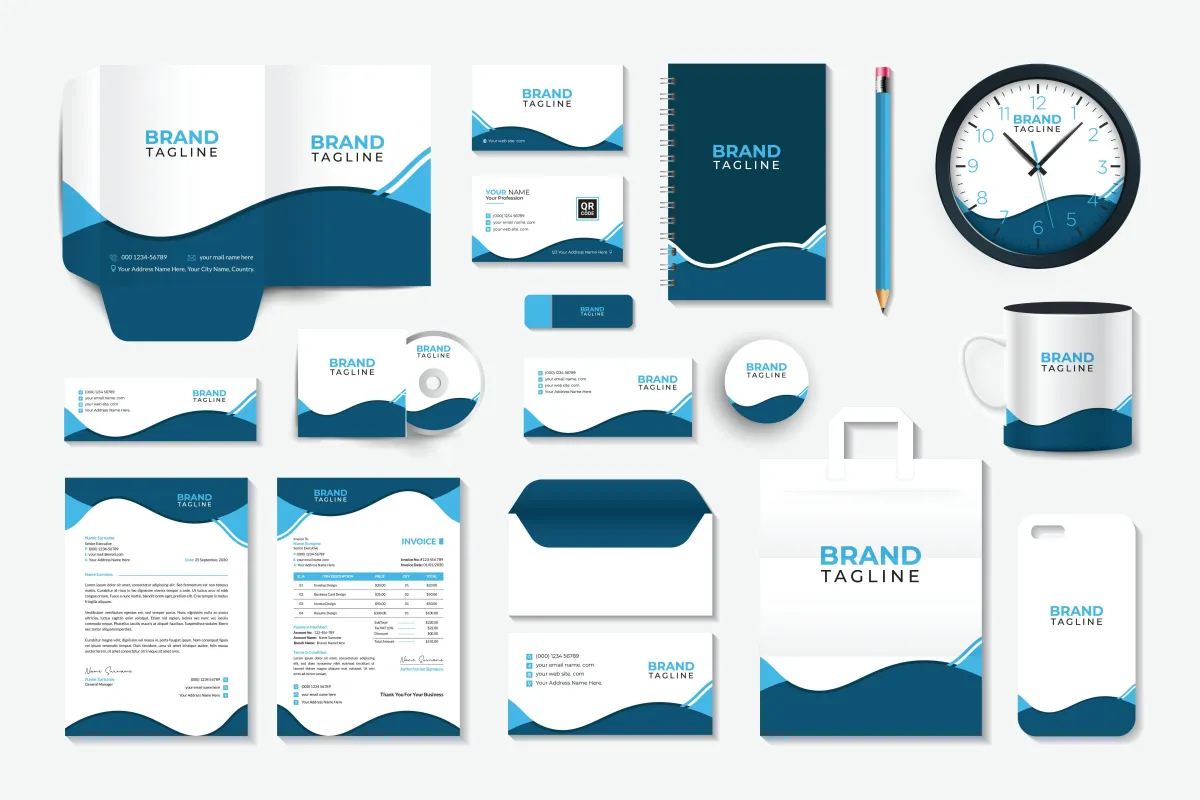
Brand guidelines, sometimes called a brand style guide, are a documented set of rules that define how your brand looks, sounds and behaves across every touchpoint. They exist so that anyone producing work on your behalf, whether that is a designer, a marketing manager, a printer, or a social media agency, does so consistently and correctly.
Think of them less as a style manual and more as a quality control system. They protect the investment you have made in your brand and make it easier to scale without things drifting.
A well-built set of brand guidelines typically covers:
Logo usage: approved versions, sizing, clear space, what not to do
Colour palette: primary and secondary colours with hex, RGB, CMYK and Pantone values
Typography: which typefaces to use, how to use them and in what hierarchy
Photography and imagery style: what types of visuals reflect the brand and which do not
Tone of voice: how the brand sounds in writing, with examples
Layout principles: how elements should be arranged across key formats
Some guidelines go further and include templates, iconography systems, motion principles and social media guidance. The depth depends on the size and complexity of the business.
Why Brand Guidelines Are a Commercial Asset
Inconsistency costs money. When your brand looks different on your website, your brochures, your social media and your trade show stand, it creates friction. Customers notice, even if they cannot articulate why. It signals disorganisation. It erodes the trust you are trying to build.
Brand guidelines solve this quietly but effectively. They mean you can brief new suppliers without starting from scratch every time. They reduce back-and-forth on design work because the rules are already established. They protect your brand when someone else is producing work in your name.
For businesses that are growing, onboarding new team members or working with external agencies, brand guidelines become particularly valuable. The larger the number of people producing branded work, the more important it becomes to have a shared reference point.
When Your Business Actually Needs Brand Guidelines
You should seriously consider brand guidelines if:
You are briefing multiple suppliers or agencies. Without a reference document, every supplier interprets your brand differently. Over time, this creates fragmentation that is expensive to fix.
You are scaling your marketing activity. As output volume increases, consistency becomes harder to maintain without a documented system. Guidelines make it possible for your team to move faster with fewer errors.
You have recently rebranded or invested in a new visual identity. If you have spent money creating a brand, guidelines are how you protect that investment and get consistent value from it.
You are building towards a trade sale or seeking investment. A well-documented brand signals maturity and operational discipline. It tells buyers and investors that your business is well-run.
You are onboarding a new marketing hire or in-house designer. Guidelines give them a clear brief from day one, without relying on tribal knowledge.
When Brand Guidelines Are Not the Right Investment Yet
Brand guidelines are not always the right starting point. If you are a small business still testing your market, refining your offer or not yet producing significant volumes of branded content, a detailed brand document may not be the best use of your budget right now.
In that situation, a simpler brand foundation, a consistent logo, a small colour palette, and a clear typeface, will serve you well until you reach a point where the need for structured guidelines is obvious.
It is also worth saying: brand guidelines only have value if they are used. A document that sits in a folder and never gets referenced is not an asset. If your business is not at a stage where multiple people are producing branded work, the value of formal guidelines is limited.
What Good Brand Guidelines Look Like
There is a significant difference between brand guidelines that are genuinely useful and ones that are produced to tick a box.
Good guidelines are practical. They give clear direction without being so rigid that they prevent good design from happening. They include real-world examples, not just abstract rules. They are formatted in a way that is easy to navigate and share.
Bad guidelines are usually one of two things: too thin to be useful or so comprehensive that no one reads them. A forty-page document covering every conceivable scenario is not necessarily better than a focused twelve-page reference that people actually open.
The goal is a document that makes it easier for anyone working on your brand to do the right thing without having to ask.
What Brand Guidelines Typically Cost
Brand guidelines are usually developed as part of a broader branding project rather than as a standalone piece of work. If you are commissioning a new identity, guidelines should be included as standard. If you are looking to document an existing brand, expect the cost to vary depending on the depth of the system and the complexity of your business.
For a small to mid-sized business, a focused and practical set of guidelines typically falls somewhere between £1,500 and £5,000 as a standalone project. Larger businesses with complex brand architectures, multiple sub-brands or global distribution will sit at a higher level.
As with most design investment, the question is not just what it costs but what it costs you not to have it.
The Bottom Line
Brand guidelines are not a luxury reserved for large corporations and they are not something every small business needs immediately. They are a practical business tool that becomes increasingly valuable as your marketing activity scales, your team grows and your brand is produced by more people across more channels.
If you are producing significant volumes of branded work, briefing multiple suppliers or building a business that needs to look credible and consistent at every touchpoint, a well-built set of guidelines will pay for itself quickly.
If you are still in the early stages and working with a single designer on limited output, focus on building a solid brand foundation first. The guidelines can follow when the need is clear.
Ready to Elevate Your Brand? Let's Chat.
Whether you need ongoing design support or a full brand refresh, we’ll take care of the visuals
so you can focus on growing your business.
Contact us
Lime Design Studio -
Graphic Design & Branding
Office 3a, Knights Farm, Newton Road, Rushden, Northamptonshire NN10 0SX
Email: [email protected]


Lime Design Studio providing graphic design and branding in Rushden, Northampton, Milton Keynes, Leicester, Kettering and across the UK.
Copyright 2026 Lime Design Studio Ltd.